How “Batteries, Surrender!” streamlined its work with volunteers and partners using Uspacy
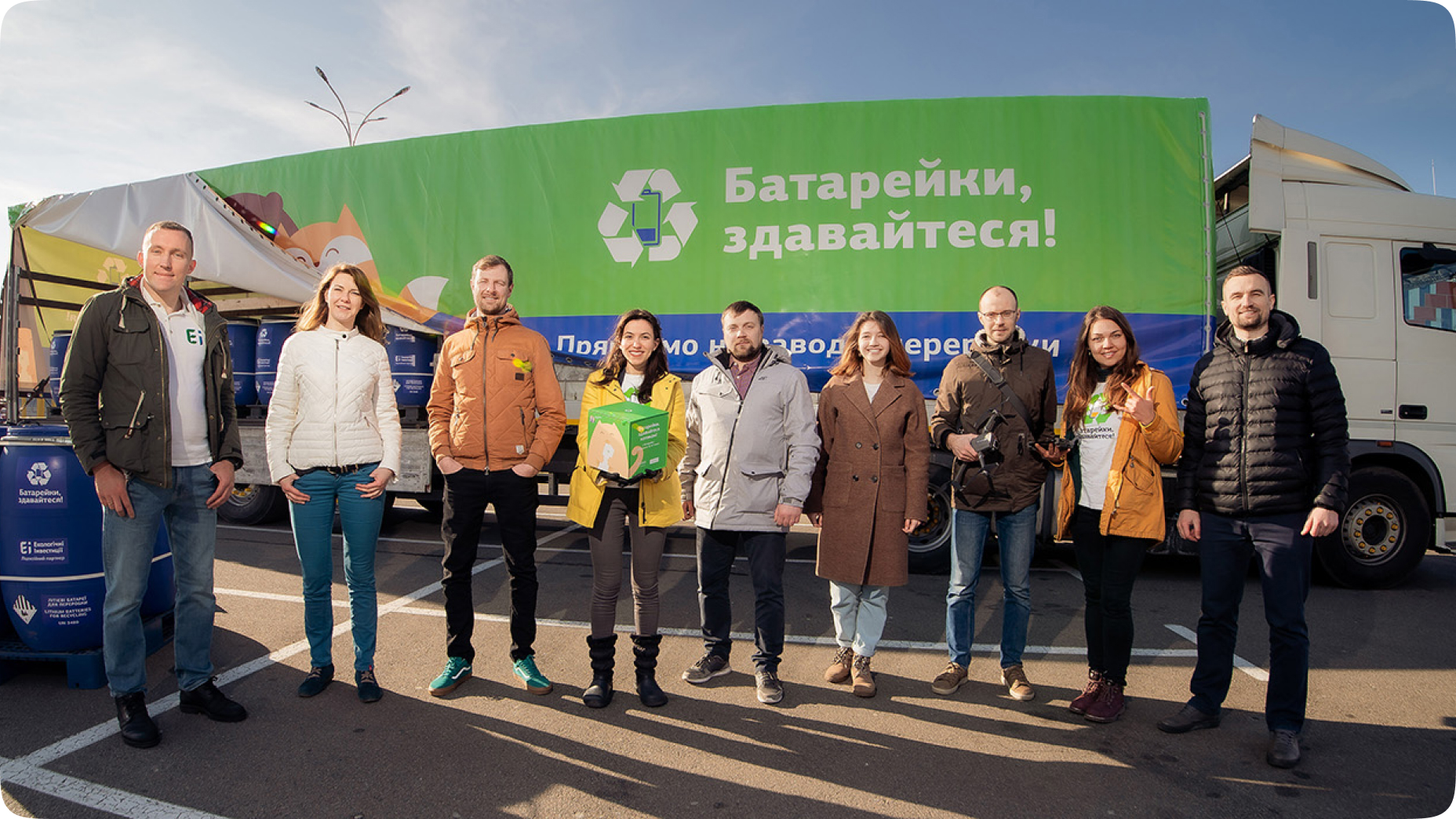
The public organization “Batteries, Surrender!” was founded in 2013 as an initiative by a small group of people who wanted to address a very practical environmental issue—ensuring that used batteries in Ukraine would no longer end up in landfills or nature.
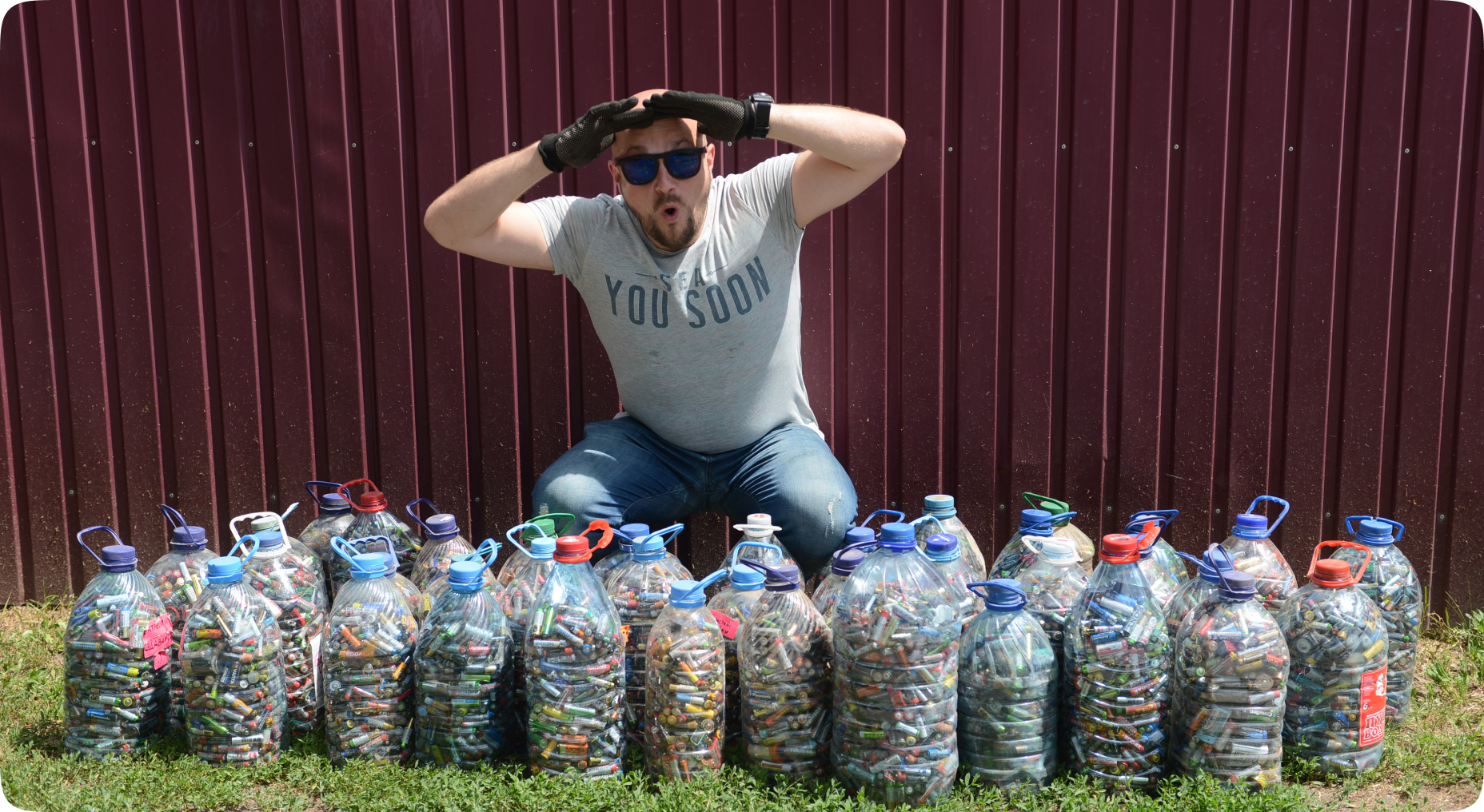
It all started with several dozen plastic bottles used as collection containers in apartment buildings, offices, and schools. But very quickly, the initiative began to spread: people from different cities started reaching out, asking how to open their own collection points and offering support. This is how a broad network of volunteers and partners gradually formed around the project.
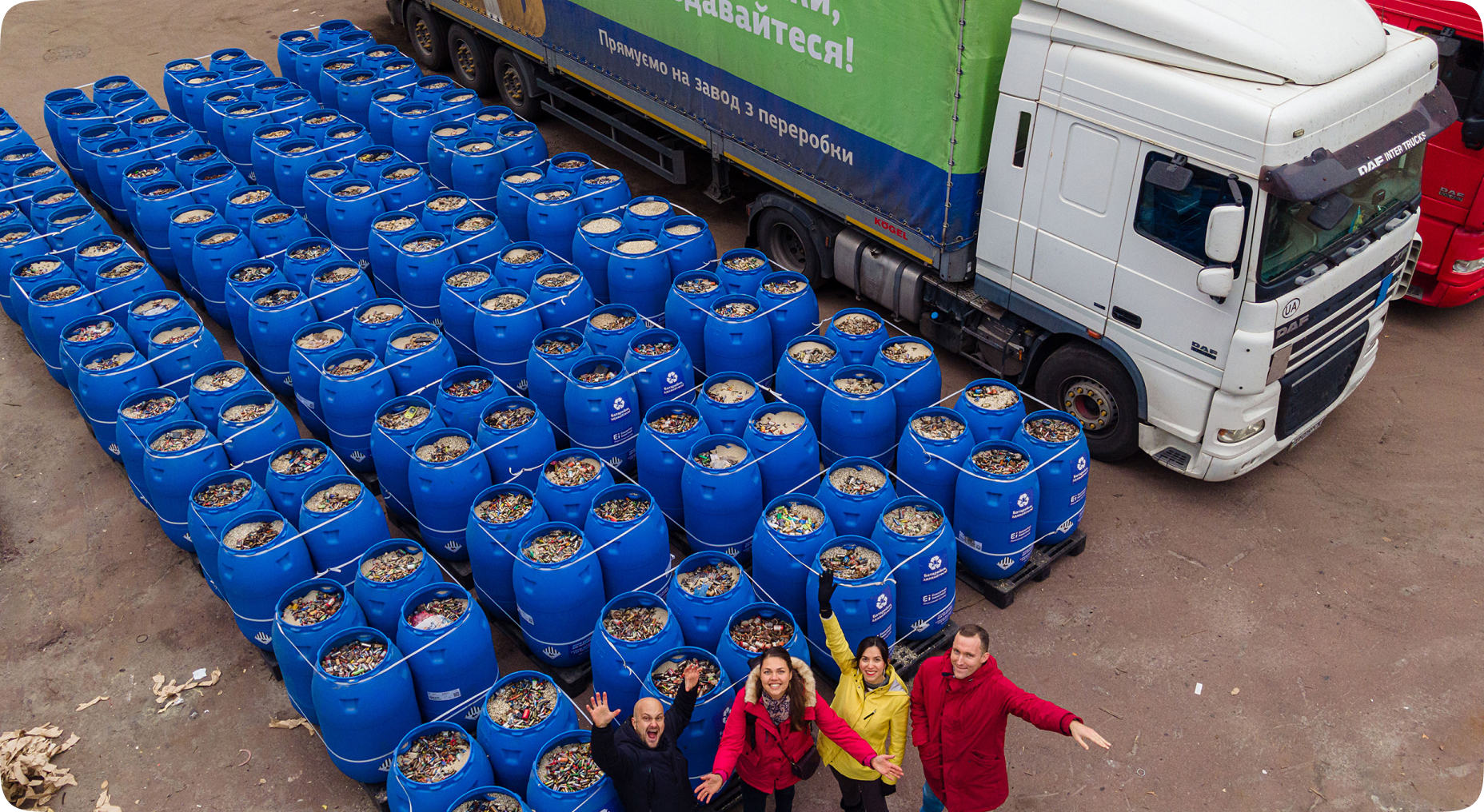
Today, this network includes hundreds of battery collection points across the country. Schools, offices, stores, and individual activists install containers, people bring used batteries, and the organization then coordinates their pickup and shipment for recycling to specialized facilities in Europe. Your company, educational institution, or residential building can also join the initiative.
From the outside, it may look like a simple environmental initiative, but behind this model is a rather complex system of human interaction. Every day, the team responds to new inquiries, launches new collection points, coordinates volunteers, and organizes logistics. And as the network continued to grow, the need for a system capable of managing all these processes became increasingly obvious.
When a volunteer project starts operating like an organization
At a certain point, the “Batteries, Surrender!” team realized that their daily operations were increasingly resembling classic business processes. Companies began reaching out to the organization wanting to install battery collection containers in their offices or stores. At the same time, requests were coming in from schools and volunteers ready to launch local collection points.
In each case, the interaction followed a specific sequence of stages. First, a person or organization sends a message. Then the team needs to explain the participation format, collect basic information, hold a short conversation, prepare documents, and ship battery collection containers. After a collection point is launched, the team adds it to the map and continues supporting communication with the volunteer or company.
When there are only a few dozen requests, these processes can be managed mentally. But once the number grows into the hundreds, intuitive management stops working. At a certain point, the team realized that without a system, coordinating all of this work turns into chaos.

Battery collection and recycling
The first attempts at systemization
The team first tried implementing a CRM back in 2014. At that time, however, it was more about bringing order to contacts than consciously implementing a process management system.
The team had no people with experience in sales or CRM systems. Concepts such as leads, funnels, or customer journey stages were not yet part of their daily operational logic. The CRM was mainly used as a place to store contact information for people and companies reaching out to the organization.
Over time, it became clear that the organization’s activities closely resembled customer management processes in business. Companies followed a certain path from first contact to the beginning of cooperation. Volunteers also moved through their own “funnel” — from initial interest to launching a collection point.
That was the moment when the team started viewing its operations differently: as a system of interactions that needed to be structured and organized. This was also important from a budget perspective — for a nonprofit organization funded by contributions from individuals and companies, efficiency is critically important.
Why previous tools stopped meeting their needs
Over the following years, the team tested several CRM systems. Some of them worked well for operational tasks — for example, helping organize container shipments or manage deliveries.
But over time, another issue emerged. Collaboration with companies increasingly started to resemble classic B2B processes. It was no longer just about ordering collection boxes, but about negotiations, coordinating details, and maintaining longer-term relationships.
In such processes, it is important to see the stages of working with a partner, the communication history, and the status of agreements. This was exactly what the previous systems began to lack. They were convenient for certain operations, but did not provide enough flexibility for managing leads and deals.
Eventually, the team realized that the tool itself was starting to limit the development of their processes.
How the team discovered Uspacy
When the question of choosing a new CRM arose, the team created a checklist of required features and, while conducting a comparative analysis, began looking toward Ukrainian solutions. They wanted to work with a product that was developing within the local context and understood the specifics of the market.
The team first learned about Uspacy through online research and later saw a product presentation at an industry event. An important factor was the feeling that this was not just another service, but a product that was actively evolving and listening to its users.
For a small organization, this matters. When a team operates with a limited budget, it is important to have the ability to gradually configure processes without spending significant resources on complex integrations or implementation.
That is why the transition to Uspacy happened gradually — the team first started using the system for key processes and then progressively expanded its role in daily operations.
How “Batteries, Surrender!” streamlined its work with volunteers and partners using Uspacy
What a typical workflow looks like
One of the most common scenarios in the organization’s work is onboarding a new volunteer. For example, a school reaches out via Facebook expressing interest in joining a battery collection initiative.
After the initial contact, a manager sends a form that needs to be completed. It includes basic information about the school, a designated contact person, and several agreements required for participation in the project. Once the form is submitted, the team holds a brief conversation to assess whether the school is genuinely committed and capable of responsibly implementing the joint initiative.
Next, the necessary documents are signed, after which the school receives collection containers and informational materials. Once the collection point is launched, it is added to the map, and the school provides photo documentation of the process.
At first glance, this workflow may seem simple. However, when there are hundreds—and eventually thousands—of schools, apartment buildings, and organizations involved, each stage requires a high level of structure and systematization.
CRM as a way to bring order
At one point, most of these processes were managed by the team using Excel spreadsheets. Contacts, partnership statuses, internal notes, and shipping information were all stored there.
For a while, this approach worked. However, as the number of interactions grew, the spreadsheets began to create more chaos than clarity.
A CRM system made it possible to consolidate all information in one place and gain visibility into the logic of the processes. A clear structure emerged—from the initial inquiry through to the launch of a partnership. All interactions are stored in the system, allowing the team to quickly understand what stage a particular partner or volunteer is at.
When the system starts working for the team
The most important change is not that individual tasks get completed faster. It happens when processes become transparent to the entire team. When every new inquiry follows a clear sequence of stages, and the full history of interactions is stored in one place, the work no longer depends on the memory of specific individuals.
This is especially important for an organization that works with a large number of volunteers. When processes are clearly defined and structured, it becomes significantly easier to hand off tasks, onboard new team members, and maintain consistent quality of work. In this sense, a CRM is no longer just a record-keeping tool—it becomes the environment in which the organization’s core processes live.
“It is inspiring to see how the system is evolving in real time and how attentive the Uspacy team is to feedback. In a good way, they are deeply committed to building a truly high-quality and flexible service: we feel like we are communicating with real people who genuinely care about our success.
It is also great that the system works quite well out of the box. If there is no budget for integrators, it can be used without them if needed. The system is intuitive enough.”

Lyuba Kolosovska
Co-founder of the movement “Batteries, Surrender!”
How “Batteries, Surrender!” streamlined its work with volunteers and partners using Uspacy
A system that enables the movement to scale
The team at “Batteries, Surrender!” openly acknowledges that its processes are still evolving. Some automations are still in the planning stage, and certain workflows are being gradually refined. However, the key transformation has already taken place: a system has emerged that allows the organization to view its work not as a chaotic stream of incoming requests, but as a set of processes that can be continuously improved.
For a civic movement working with thousands of people, this is critical. When each new battery collection point is launched according to a clear logic, and interactions with volunteers and partners are not lost in email threads and spreadsheets, the team gains the ability to focus on what matters most—growing the network and promoting a culture of responsible waste management.
Any volunteer-driven movement is powered by people’s energy. But when that energy is combined with structure, the movement gains the potential to scale much faster. For “Batteries, Surrender!”, Uspacy has become exactly such a tool—not just a contact management system, but a way to organize a complex network of interactions so the team can focus on its core mission: expanding the battery collection network and engaging more and more people.